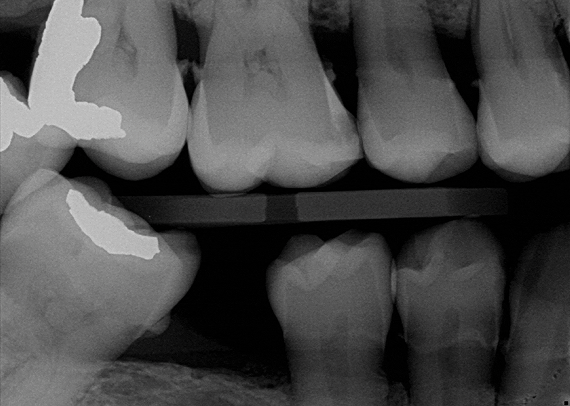
Digital Dental X-Rays & 3D Imaging in Chevy Chase, MD
Modern Haus Dental brings the latest in digital dental X-rays and 3D imaging, led by Dr. Kristy Lee, DDS - voted Top Dentist by Bethesda Magazine and Washingtonian Magazine . A graduate of NYU College of Dentistry and a former U.S. Air Force dentist, Dr. Lee uses digital x-rays, CBCT, and the iTero Lumina intraoral scanner with NIRI near-infrared imaging to give you a clear, accurate diagnosis with minimal radiation.
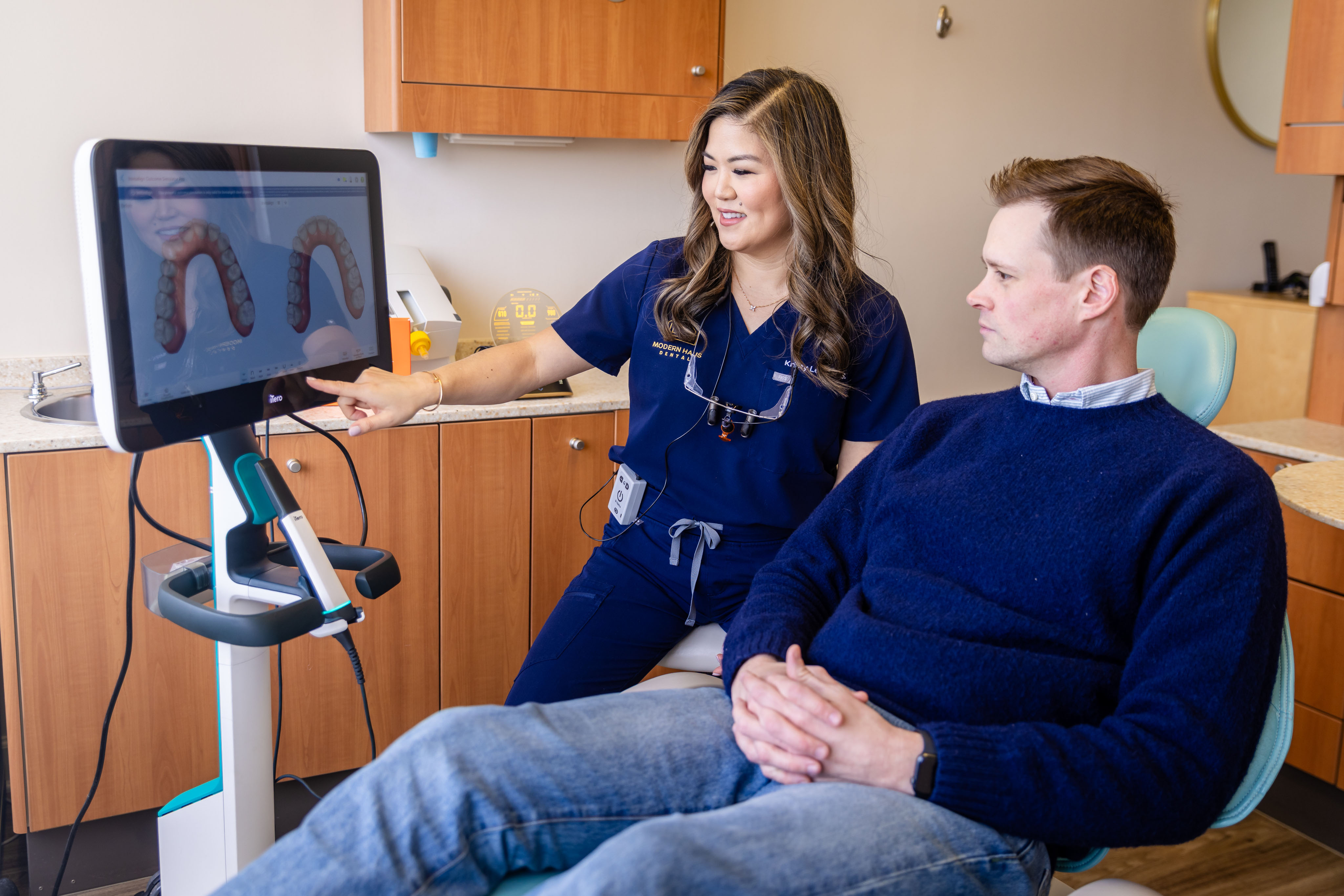
Why Patients in Chevy Chase Choose Modern Haus Dental for Digital X-Rays
A complete digital Full Mouth Series (FMX) of dental X-rays (18 X-rays) exposes you to about 0.09 mSv of radiation. This is roughly equivalent to the cosmic radiation you receive during a two hour flight.
In other words, flying from DC to Chicago one-way is equivalent to 18 x-rays in a full-mouth series.
A FULL MOUTH SERIES EXPOSES YOU TO THE SAME RADIATION AS A 2 HOUR FLIGHT

Dental x-ray
2 hour flight
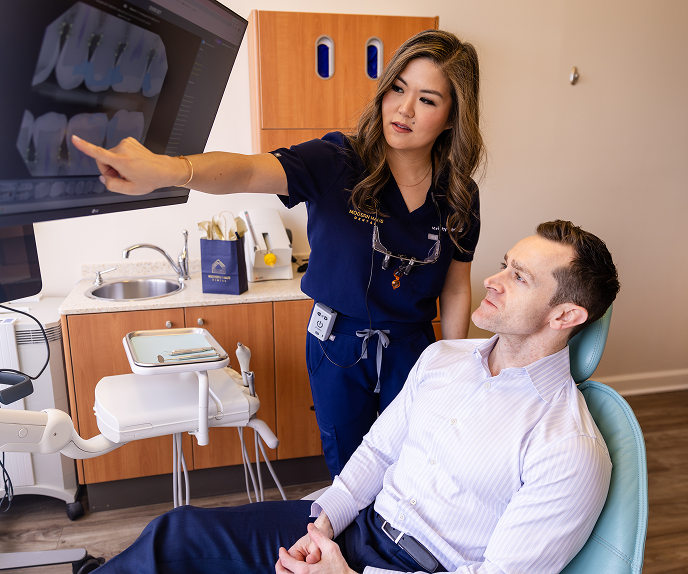
Dr. Kristy Lee is recognized as a top dentist and her team brings decades of combined experience to every visit. Here's what sets us apart:
Connection: We take the time to get to know you and build a real relationship.
Attention: You get our time for as long as you need. No rushing.
Integrity: We recommend only what's best for your long-term oral health.
Advanced technology: AI-assisted diagnosis, painless digital sensors, low-dose 3D CBCT, and iTero Lumina NIRI imaging.
Transparent care: Our out-of-network model means no insurance company decides your treatment plan.
What Are Digital Dental X-Rays?
Digital dental X-rays are images of your teeth, gums, and jawbone taken with a small electronic sensor instead of traditional film. The sensor sends the image straight to a computer screen, so Dr. Lee can view it within seconds, zoom in on tiny details, and walk you through exactly what she sees. Compared to old film X-rays, digital radiography:
Uses up to 90% less radiation than traditional scans
Produces sharper, clearer images
Is faster, so you spend less time in the chair
Safer and more comfortable
Our Advanced Dental Imaging Technology
We've invested in the same imaging tools used by top specialty practices - because better images mean better diagnoses, better treatment plans, and better long-term outcomes for you.
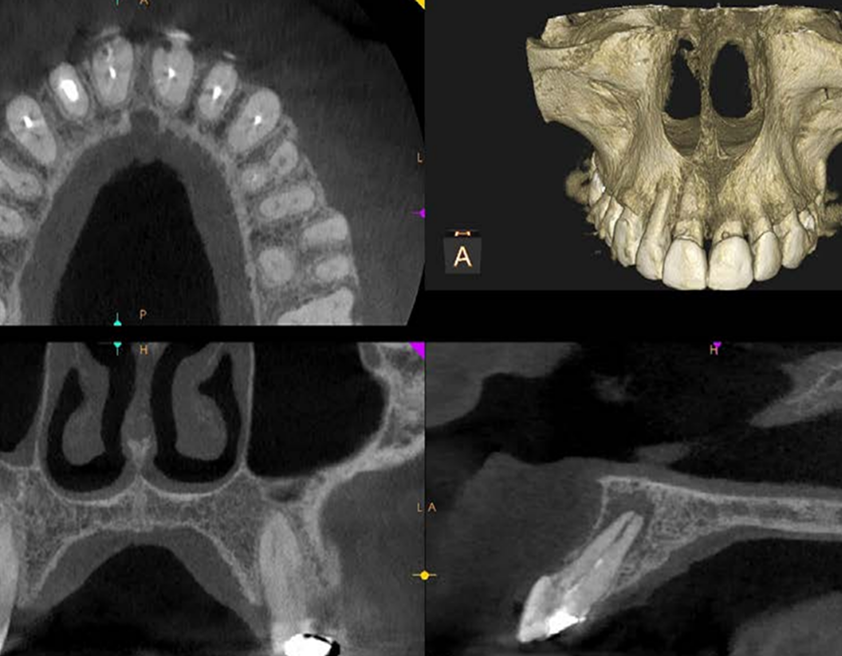
3D CBCT Scanning
A CBCT scan (Cone Beam Computed Tomography) gives us a full 3D view of your teeth, jawbone, nerves, and sinuses - all from one quick, painless scan taken right here in our office. Unlike a flat X-ray that shows a two-dimensional slice, a CBCT scan lets Dr. Lee rotate, zoom, and examine your anatomy from every angle.
We use 3D CBCT imaging for:
Dental implant planning - to measure bone density and map nerve pathways before placement
Wisdom tooth evaluation - to see exactly how an impacted tooth sits relative to the nerve
Complex root canals - to view the full root structure in detail
Airway and sinus analysis - to assess breathing-related concerns
TMJ evaluation - to examine the jaw joint in three dimensions
Our CBCT system uses a low-dose mode that delivers 3D imaging quality at radiation levels comparable to a standard panoramic X-ray — so you get the detailed diagnostic picture without an unnecessary increase in exposure. Everything happens in-office with no referral to a separate imaging center.
iTero Lumina with NIRI Near-Infrared Imaging
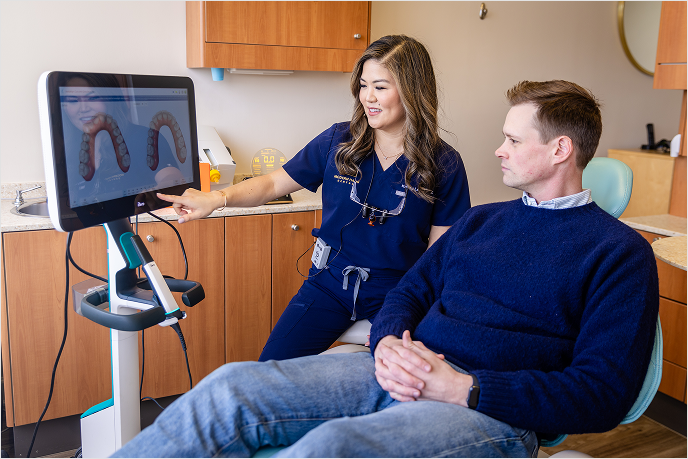
The iTero Lumina is the latest and thinnest iTero intraoral scanner, and it uses NIRI (Near-Infrared Imaging) to detect cavities between your teeth - without any radiation at all. It also captures high-precision 3D digital scans for Invisalign, crowns, and night guards in minutes, with no goopy molds.
Learn more about the benefits of iTero Lumina with NIRI technology on our blog.
AI-Powered X-Ray Analysis with Overjet
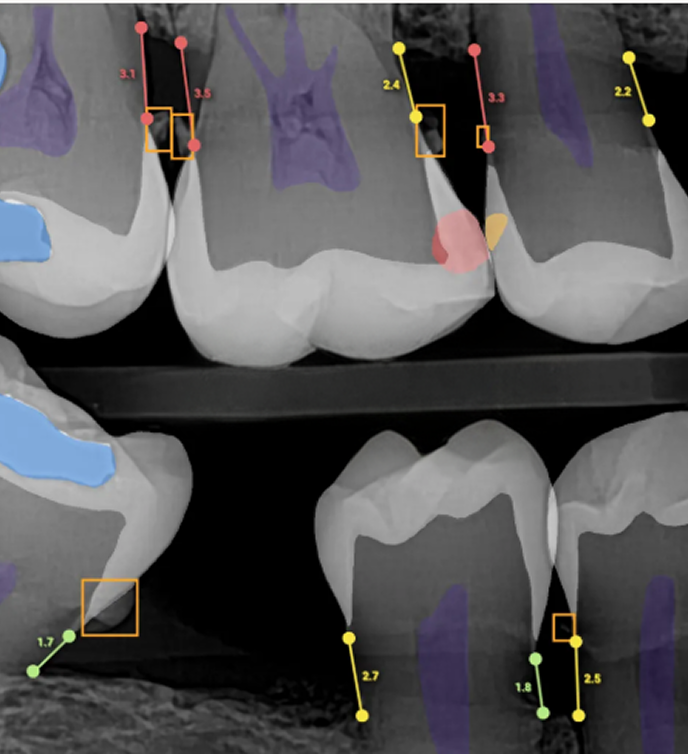
We use Overjet, an FDA-cleared dental AI platform that analyzes your X-ray images in real time, right on screen while you are in the chair. Instead of looking at a standard black-and-white X-ray, you see exactly what Dr. Lee sees - with color-coded overlays that highlight areas of concern so nothing gets lost in translation.
Here is what Overjet detects and displays on your X-rays:
Cavities - outlined and color-coded so you can see the exact size and location
Bone levels - measured in millimeters to track gum disease progression over time
Calculus (tarite buildup) - identified beneath the gumline where it is invisible to the eye
Periapical issues (infections near the root) - flagged early before they become painful
Ill-fitting Prior restorations - highlighted so you can see where that crown margin may be open or if a previous filling is open
The result is earlier detection, fewer missed problems, and more confident treatment planning. And because you can see the findings yourself, you understand exactly why a treatment is recommended.
How Safe Are Our Low-Radiation Digital X-Rays?
This is the question patients ask most - and the honest answer is: very safe. To put it in everyday terms, here's how the radiation dose from our digital dental X-rays compares to common activities. The numbers below come straight from published radiation-comparison data:
In simple words: a complete digital full mouth X-ray series at Modern Haus Dental gives you about the same radiation as roughly 11 days of normal life or about two cross-country flights. A single digital bitewing is even less: about half a day of the background radiation you'd get anyway.
We also follow the ALARA principle (As Low As Reasonably Achievable). That means:
We only take X-rays you actually need
We use lead aprons and thyroid collars for every patient
The ADA doesn’t even require lead aprons anymore because the radiation is so low
We adjust protocols for children and pregnant patients
We use low-dose mode on our CBCT whenever clinically appropriate
Frequently Asked Questions
A digital X-ray can reveal:
● Cavities between teeth and under existing fillings
● Bone loss from gum disease and periodontal issues
● Abscesses, cysts, and infections
● Cancerous and non-cancerous tumors
● Impacted wisdom teeth and poor root positioning
● Developmental abnormalities in children
● Hidden problems below the gum line
● Bone structure for dental implants, crowns, and restorative dentistry
Catching these issues early can save you time, money, discomfort - and your natural teeth.
● New patients: Full mouth series (FMX) every 3–5 years
● Recall visits: Bitewings once a year to catch new cavities
● Implant or Invisalign patients: Targeted 3D CBCT scans for treatment planning
● Higher-risk patients: More frequent imaging (active gum disease, deep fillings, history of cavities)
● Healthy adults with low cavity risk: Less frequent imaging
We will always explain why we're recommending a specific X-ray before we take it.
Schedule Your Digital Dental X-Ray Appointment in Chevy Chase, MD
Ready to experience painless, low-radiation digital dental X-rays and advanced 3D imaging with one of the region's top-rated dentists? We welcome patients from Chevy Chase, Bethesda, Washington D.C., Potomac, Friendship Heights, and Montgomery County.
Book you appointment online